
Tell the EPA to Protect Endangered Species From Atrazine, Not Pesticide Corporation Profits
Don’t let the EPA and FWS march us towards species extinction!
PROPOSED RULE: Memorandum to Open 60-day public comment period on Fish and Wildlife
Service (FWS) Draft Biological Opinions for Atrazine and Simazine
Regulations.gov Document ID: EPA-HQ-OPP-2020-0514-0419
Comment Period: October 7, 2025 to December 8, 2025
Agency: Environmental Protection Agency (EPA)
View the terms of participation and privacy notice for Regulations.gov. All comments made on regulations.gov action centers will be public comments, so we encourage action-takers not to include personally identifiable information in their messages.
EPA IGNORES THE HARMS OF ATRAZINE
Atrazine has been banned by more than 60 countries because it is so dangerous… yet it is the second most widely used herbicide in the U.S. The EPA, together with the FWS, have relied upon industry funded studies, evaluated the risks, and concluded that atrazine and its chemical cousins simazine and propazine, pose no threat to over 500 endangered species. This is absurd.
Background
The EPA is seeking public comments on its flawed Endangered Species Act (ESA) Biological Opinions for atrazine and simazine—pesticides long linked to harm to wildlife, particularly in aquatic ecosystems. This docket will shape how the agency evaluates and protects threatened and endangered species and their critical habitats from the impacts of these highly hazardous chemicals.
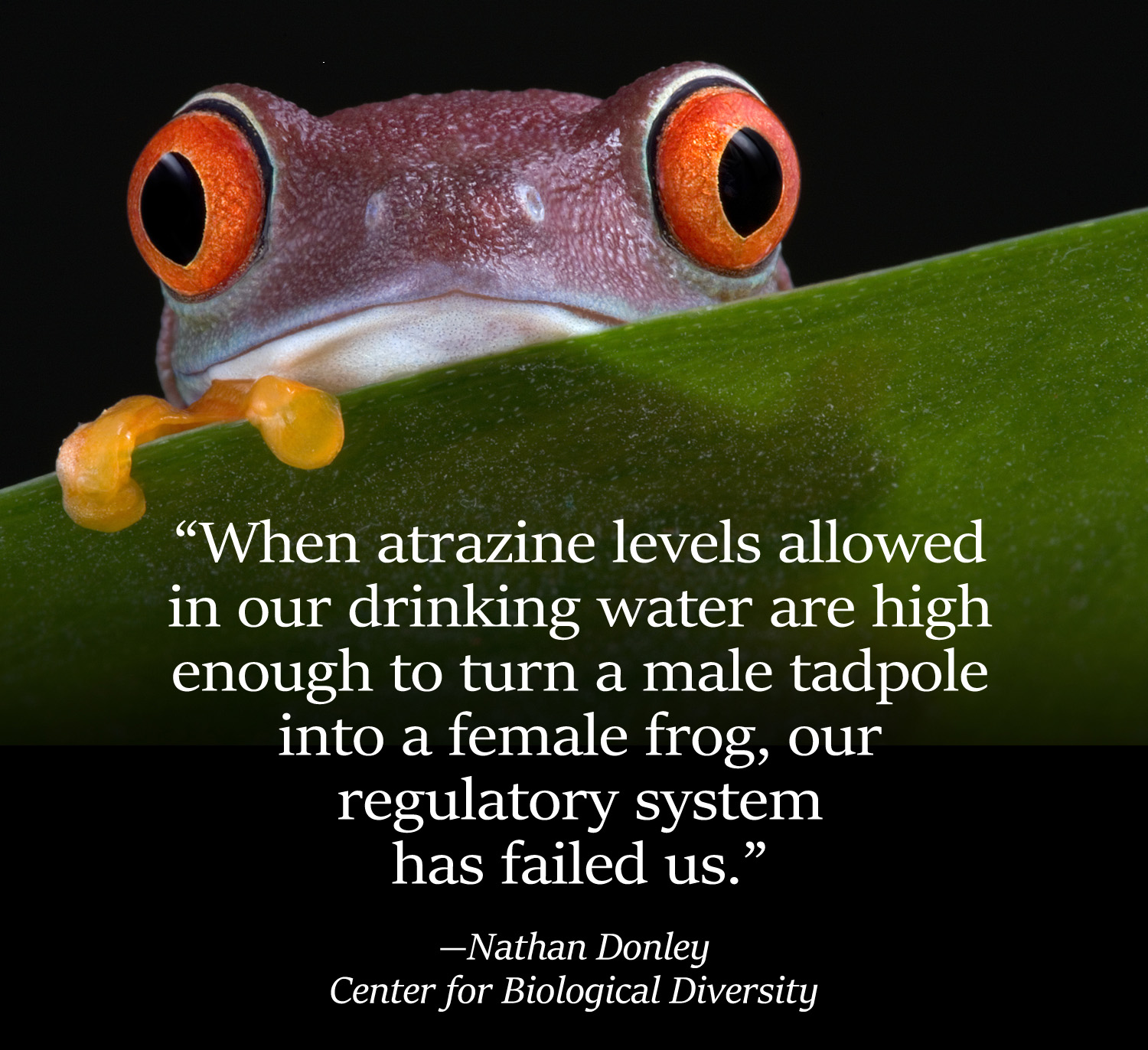
Atrazine, as well as simazine, contaminate waterways across the country, infiltrating rivers, wetlands, and groundwater that Listed Endangered Species (and humans) depend on for survival. These herbicides are well-documented hormone disruptors that interfere with reproduction, growth, immune function, and normal development in fish, amphibians, mammals and other vulnerable species. The herbicide's endocrine disrupting effects are so powerful the chemical can change male frogs into females.
Atrazine alone is banned in more than 60 countries because of its toxicity—yet in the U.S., millions of pounds are applied each year, largely to prop up industrial-scale conventional commodity crop production.
EPA’s own past assessments have found that atrazine is likely to harm more than 1,000 of the nation’s most endangered animals and plants. Yet due to industry pressure, the agency continues to downplay these risks. As EPA updates its ESA evaluations and biological opinions, it is critical that the agency fully acknowledge the scientific evidence and protect endangered species that are barely hanging by a thread.
We would be remiss to ignore that the contamination of our water supply by these dangerous herbicides not only impacts endangered species, but can take a huge toll on the health of humans as well. In 2017, the Environmental Working Group reported that drinking water systems supplying 30 million Americans in 28 states were contaminated with atrazine. Even more alarming, a dozen communities saw surges three to seven times above EPA’s own safety threshold. As an endocrine disruptor, atrazine can interfere with the hormonal activities of humans at extremely low doses and is linked to birth defects and cancer. And if that's not enough, the International Agency for Research on Cancer (IARC) officially classified atrazine as a “probable human carcinogen” recently.
Call to Action
EPA needs to hear from the public. Submit a comment and urge the agency to:
- Fully incorporate the best available industry-independent science on the harms of atrazine and simazine
- Strengthen its protections for listed species and their designated critical habitats
- Reject industry-influenced analyses that underestimate the real-world, ecosystem-wide impacts of these chemicals
Endangered species cannot defend themselves against toxic pesticide exposure—but we can. Add your voice to the docket today and demand strong ESA protections based on science, not industry spin.