Tell the EPA to Ban Formaldehyde in Consumer Products and Building Materials
The EPA should reduce our exposure to carcinogenic formaldehyde, not raise the levels we’re breathing in!
PROPOSED RULE: Draft Risk Calculation Memorandum: Formaldehyde
Regulations.gov Document ID: EPA-HQ-OPPT-2018-0438-0240
Comment Period: December 3, 2025 to February 2, 2026
Agency: Environmental Protection Agency (EPA)
View the terms of participation and privacy notice for Regulations.gov. All comments made on regulations.gov action centers will be public comments, so we encourage action-takers not to include personally identifiable information in their messages.
EPA DOUBLES THE AMOUNT OF FORMALDEHYDE CONSIDERED SAFE TO INHALE
The EPA has opened a docket for public comments on its proposal to increase the threshold for inhalation exposure to cancer-causing formaldehyde.
Investigative journalist, Sharon Lerner, who has reported extensively over the last decade on the chemical industry uncovers for ProPublica:
“The chemical industry finally got its wish.
Industry lobbyists have long pushed the federal government to adopt a less stringent approach to gauging the cancer risk from chemicals, one that would help ease regulations on companies that make or use them.
[In December], in a highly unusual move, the Environmental Protection Agency embraced that approach in announcing that it is revising an assessment of the health dangers posed by formaldehyde, a widespread pollutant that causes far more cancer than any other chemical in the air. Working on that effort were two of those former industry insiders, who are now top EPA officials.
The proposed revisions to the assessment, released [December 3], nearly double the amount of formaldehyde considered safe to inhale compared with the version that was finalized in the last weeks of the Biden administration. Even that older assessment significantly underestimated the dangers posed by formaldehyde, a ProPublica investigation published last year found.
Under previous Republican and Democratic administrations, EPA scientists were instructed to assume that chemicals that cause cancer by damaging DNA — the largest group of carcinogens, which includes formaldehyde — pose a “linear” risk, meaning that even small exposures can be dangerous. The agency adopted the approach almost 40 years ago to protect against the multitude of low-level cancer threats the public faces daily. But the industry’s favored method assumes that certain carcinogens pose no risk at lower levels and that the danger should only be considered once exposure reaches a certain threshold.
The EPA’s adoption of this threshold model for formaldehyde might come as little surprise given that some of the scientists who have promoted the approach on behalf of companies are now running the agency.
Among them are Nancy Beck and Lynn Dekleva, who both previously worked for the chemical industry’s main trade group, the American Chemistry Council, which represents more than 190 companies and has vigorously pushed back against the EPA’s efforts to regulate formaldehyde.”
Formaldehyde is used in a wide range of consumer products.
- Furniture and wood products: cabinetry, flooring, mouldings, plywood, particleboard, and MDF
- Household and personal care products: cleaners, disinfectants, car waxes, liquid soaps, and cosmetics such as nail polish, eyelash glue, and hair straighteners
- Textiles and clothing: wrinkle-resistant fabrics, carpeting, curtains, and upholstery
- Construction materials: foam insulation and adhesives
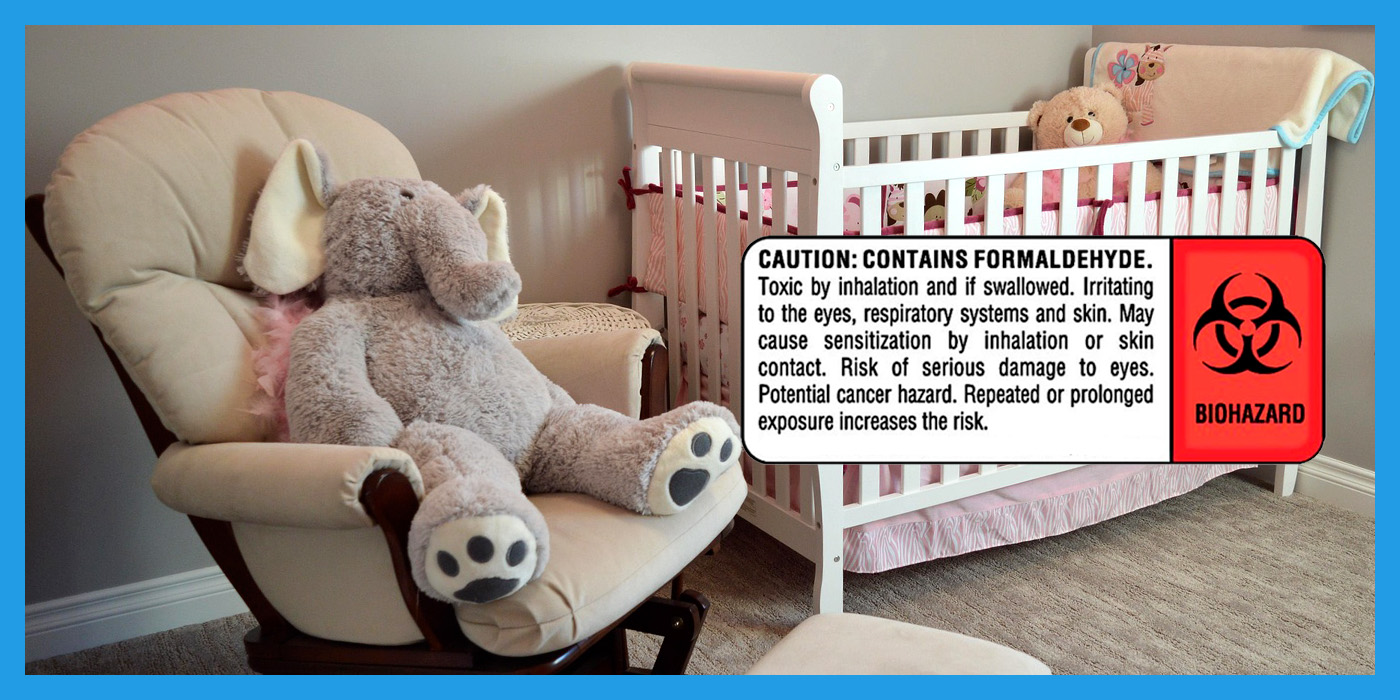
A majority of furniture is made with pressed wood, particleboard, plywood, or synthetic finishes—and can off-gas formaldehyde. For vulnerable babies and young children, who breathe more air relative to their body weight and spend long hours close to furniture like cribs, changing tables, and dressers, the risks are even greater.
The EPA should be lowering the threshold for inhalation exposure to formaldehyde, and should be banning its use in cases where people are chronically exposed over a lifetime. Instead, the EPA is doing the opposite.
Speak out against the EPA’s proposal to increase the exposure threshold on formaldehyde. You can use our pre-written comment, but we encourage you to edit and make it your own.